Most people want to get rid of waste. Maria wants to reuse it. The master’s student from Romania is in Zwolle for the Future Cities minor at Windesheim. Together with fifty students from around the world, she’s redesigning WARTZ, the heart of the Spoorzone, for the year 2075.
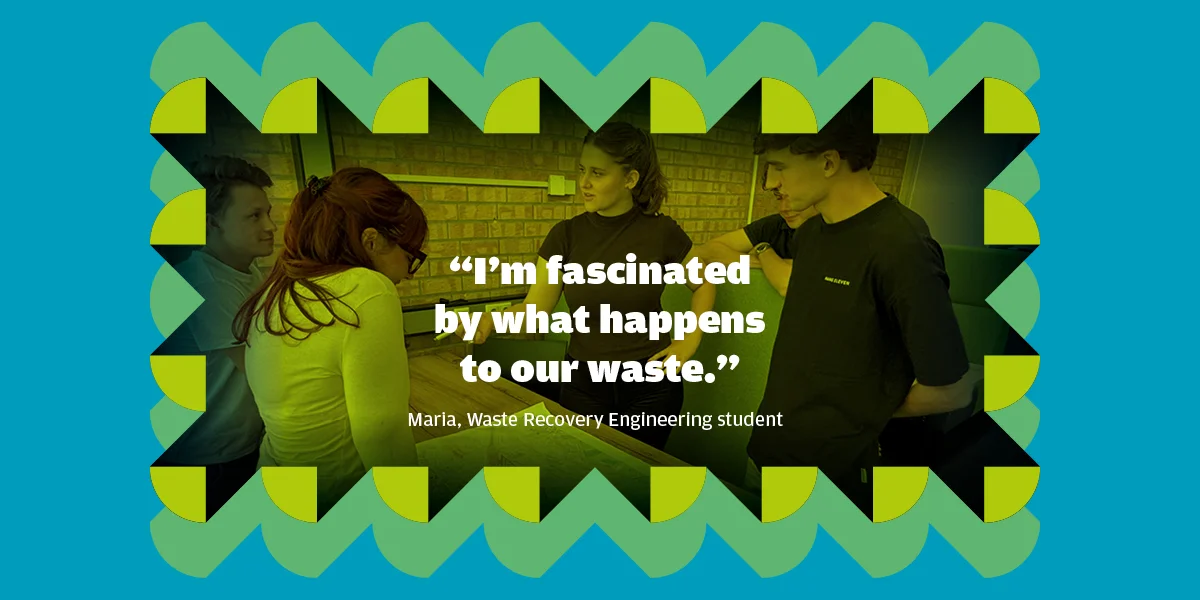
“I never thought I’d say this, but I’m fascinated by waste. After my degree in environmental engineering, I started a master’s focusing on waste. I realised that everything we do produces waste. And I believe that, with the right mindset and technologies, we can deal with it in a sustainable way in future cities. So, this minor is a perfect fit.”
“In our plans, we chose recycling as the best way to deal with waste in WARTZ. Landfill isn’t an option, and turning waste into energy would require heavy industry. So, we are designing a recycling storehouse in an existing building, with a testing zone next to it. That’s where researchers and students can try out new ideas and modern technology for dealing with environmental problems.”
“I’m in a group with four other students: an architecture student from Italy, two civil engineering students and a spatial planning student from the Netherlands. We work really well together! And to me, that is a huge advantage. Because on a project like this, you need different perspectives to achieve what you can’t do alone. When I go back home, that’s what I’ll probably tell everyone.”
“There are five of us from Romania. They feel like home, especially when I feel far away from mine. We became very close, very quickly. The other day I said: ‘The irony! We all study in the same city back home, but we had to come all the way to Zwolle to become friends.”
“I noticed that Dutch cities are full of green areas. There are trees, parks and water everywhere. I like that. Even my student flat has a balcony overlooking a park. It actually makes me excited to get up in the morning. That’s what Dutch city planning has taught me to value nature and work with it.”
“The biggest difference in city planning? I feel like some things in the Netherlands might be more restricted. For example, in Romania there seems to be more space for rural ways of living. My dad lives on the outskirts of town and keeps chickens, which he loves. This is quite normal over there, but I’m not sure it would be as easy over here.”
“Bike lanes! We definitely need to introduce those back home. Since I got here, I’ve been cycling between my flat and the city centre. But at home, the cycling infrastructure isn’t suitable yet. Improving it would make cycling a real alternative to cars and buses, and that would help the environment too.”
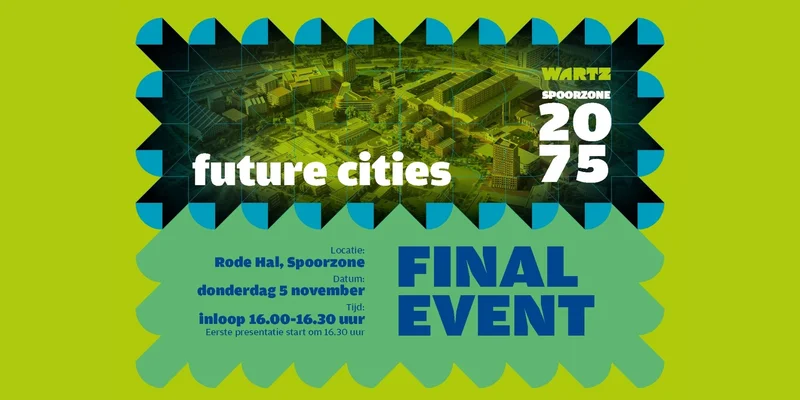
“After this minor, I’m taking a module in Water Management. In February I’m going back home to Cluj-Napoca, Romania, to study Waste Recovery Engineering. But first, our presentation on 5 November. I’m really curious to hear what people think of our plans.”